
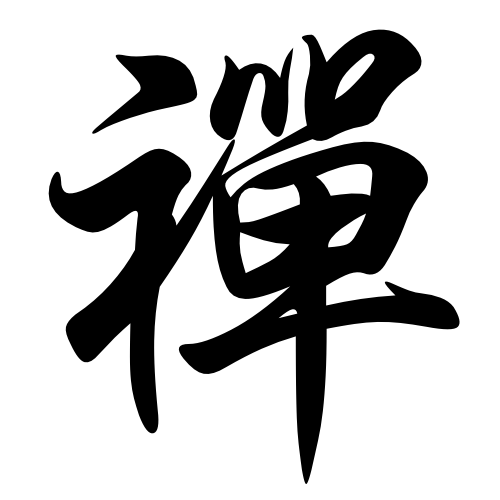
Question: Is Chán 禪 a religion?
Key: No, Chán 禪 is not a religion. It holds no dogma and asks for no belief. The answers it offers arise entirely from within, drawn from the depths of one’s own mind through quiet, experiential practice. While this journey can unlock profoundly spiritual states, they are never granted—they are personally discovered, directly experienced, and silently known.
Details: At its core, Chan 禪 is not an institution or religion per se; it is the domain of the mystic 隱士 (yǐnshì). It is a profoundly private, direct, and unmediated personal experience with the divine—or, in the language of the tradition, a direct realization of the way things are, or seeing one nature 見性 (Jiànxìng), which is synonymous with the Dao 道.
The institutional trappings (rituals, robes, hierarchies, and even monasteries themselves) are often just the outer shell for one branch of Chan 禪 practitioners. For many, they serve merely as a temporary training ground or a waystation. The true essence of Chan 禪 has always been carried by the wanderers, the solitary practitioners, and those who seek the “special transmission outside the scriptures” (教外別傳 Jiàowài biéchuán).
It is not about believing in dogma, accumulating merit, or participating in public ceremony. It is about the silent, immediate encounter with ultimate reality. For a practitioner walking the mountain mystic path, the true temple is the mind itself, and the true practice is lived in the raw, unfiltered reality of the natural world, far from the confines of any established system.